
Uncategorized
‘Turtle Island’ is the name for the lands now known as North and Central America. It is a name used by some Indigenous peoples who believe their land was formed on the back of a turtle.
17
Feb
Feb
Though regional versions exist, the core of this creation story relates to a time when the planet was covered in water. Different animals all tried to swim to the bottom of the ocean to bring back dirt to create land but they all failed. A muskrat was the last animal to attempt the task. The muskrat swam deep and remained under water for a long time. Eventually the muskrat resurfaced with some wet soil in its paws. Sadly the swim took the muskrat’s life, but Nanabush (a supernatural being who has the power to create life) took the soil and placed it on the back of a turtle. With this act, land began to form and so became Turtle Island.
Not all creation stories from the Indigenous Peoples of America feature a turtle, some refer to a pregnant Sky Woman, others feature a Raven and others an ocean spirit called Sedna.
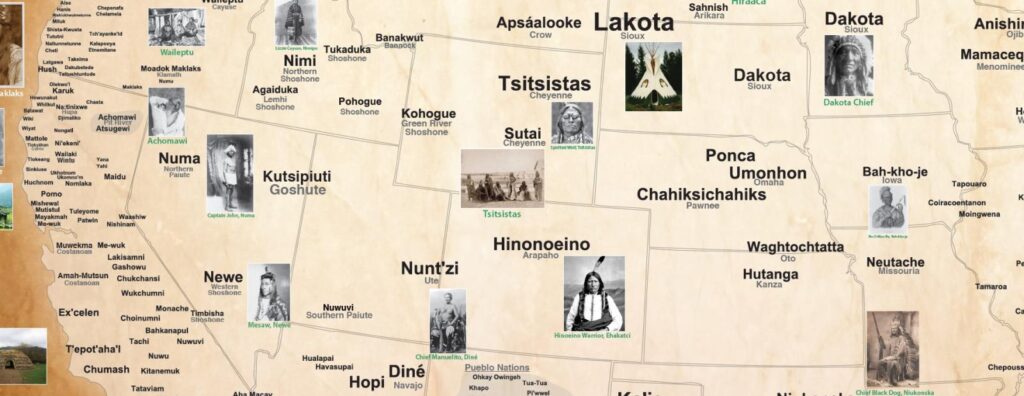
Indigenous people from Turtle Island are often referred to as ‘Native Americans’. Turtle Island is a large place and there are over 1000 different Native American Nations, each with diverse cultures and experiences.
Culture
Native American culture and belief are deeply connected to their land and environment. Temperature, climate, the presence of mountains, rivers and oceans form the basis of spiritual belief and practice.
Below are some brief examples of different parts of Native American Culture. As previously stated, Native American Culture is highly diverse and cannot be fully represented here.
Totem Poles
Native American Totem Poles are carved into the trunks of large trees. These carvings are made using a variety of items including shells, wood, bone, antlers and beaver teeth. Depending on the intricacy of the design and experience/skill of the carver, a totem pole can take anywhere from 3 to 9 months to create and can be up to 12 meters high.
Totem poles are often used to tell stories with the symbols carved beautifully representing ancestors, different figures and events. Other uses included for memorials, houses or to mark graves.
Totem poles are created by the Pacific Northwest Nations who have access to large trees that are needed to create them.
The Longhouse
The Haudenosaunee Confederacy (meaning ‘People of the Longhouse’) is often described as one of the oldest participatory democracies on the earth. It is made up of 5 nations; Mohawk, Oneida, Onondaga, Cayuga, and Seneca.
The purpose of the confederacy was to unite the Nations to live peacefully. Each Nation governed its own internal affairs and for matters relating to the confederacy, representatives from each nation would meet in a Grand Council.
Before colonization, the Haudenosaunee lived together in Long Houses. Made from wood, bark and animal hide (used on door for warmth), Long Houses were up to 200 feet (60 metres) in length and 18 feet (5 metres) in width. These dwellings were windowless except for smoke holes set at 20 feet (6metres) intervals in the roof to allow smoke to escape from fires burning inside.
Being a matrimonial society (kinship based on the mother’s line), whole extended families would live in the Long Houses with individual rooms set aside for each family. Communal fires ran along the centre of the Long House.
The Feathered Headdress
The Feathered Headdress is a culturally important item that was first believed to be created by the Sioux Nation from the Great Plains region. The creation of a headdress is a significant celebration and those who wear the headdress are held with great esteem and respect.
Colonial History
In 1492, the Italian Christopher Columbus set sail from Spain. His intent was to head west in the hope of finding a more direct route to Asia.
It was only by chance he stumbled upon the ‘New World’. In October 1492, Columbus and his crew set foot on an island in present day Bahamas and claimed it for Spain, beginning the invasion and colonisation of the Americas, including Turtle Island, by various European countries.
Since this time of invasion, Native Americans have experienced murder, violence, disease, dispossession from land and suppression of languages, culture and identity by colonial powers.
The Trail of Tears
One significant event was ‘The Trail of Tears.’ In order to move Native Americans off their lands to steal them, in 1830, President Andrew Jackson signed the ‘Indian Removal Act.’ This law allowed the U.S. army to forcibly remove the Cherokee, Choctaw, Creek, Chickasaw and Sminole peoples from their land to present day Oklahoma.
The ‘Trail of Tears’ refers to the harsh journey made on foot through challenging terrain and winter conditions. The exact numbers of people dislocated is unknown and sources range in estimates from 60,000 to 100,000 Native American people being dispossessed from their lands.
Tragically, up to 15,000 people died during the journey as a result of the actions of the U.S. government and army.
Cultural Appropriation
A key issue that Native American people have been fighting against are the many negative stereotypes about their culture and how they are presented in society.
In different forms of media including children’s books and T.V. shows, Native Americans are often portrayed as violent and aggressive. Symbols of Native American people have been used by many businesses and organisations in highly disrespectful ways. This includes using images of ‘Chiefs’ and famous historical figures for selling children’s toys, costumes for festivals and celebrations (for example non-Native American people wearing headdresses to emblems used for sporting teams).
